The Properties of Yin and Yang
Yin is the opposite of Yang, and Yang is the opposite of Yin. Formless things are considered positive (Yang), while massive or solid things are considered negative (Yin). Therefore, when defined in terms of Yin and Yang, an electron is seen as positive and a proton as negative.
Poverty is associated with Yang, while wealth is associated with Yin. Yang disperses and evaporates — it continually diminishes, which is why it is linked to poverty. Yin condenses and accumulates — it grows and becomes more abundant, hence it is linked to wealth.
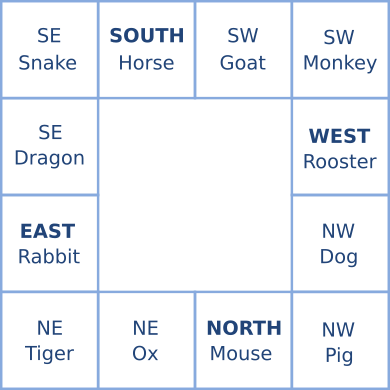
Traditionally, the Chinese compass differs from the Western one. A traditional Chinese compass points south, which is considered the top, while north represents the bottom. According to Chinese geomancy (Feng Shui), the top is Yang — it is positive and represents warmth. The bottom is Yin — it is negative and represents coldness.
When facing south, the sun rises in the east and sets in the west. The east is considered Yang, and the west is considered Yin. The east corresponds to the left-hand side — the leading side — while the west corresponds to the right-hand side — the following side. As a result, many leaders are left-handed. Additionally, because Yang dissipates and Yin condenses, most people tend to have a stronger right hand.
| male | female | spring | autumn | electron | proton | summer | winter |
| energy | mass | question | answer | small | large | robbing | stealing |
| up | down | expose | conceal | light | darkness | give | receive |
| dissipate | condense | awake | sleeping | hot | cold | injuries | diseases |
| happiness | sadness | birth | death | out | in | go out | return home |
| positive | negative | beginning | ending | vertical | horizontal | day | night |
| fast | slow | poor | wealthy | good | bad | sun | moon |
| left | right | growing | deteriorating | life | death | white | black |
| back | front | moving | stagnant | *south | *north | *east | *west |
| short | long | strengthen | endurance | expose | hidden | strong | week |
| leader | follower | dry | humid | active | passive | attack | defense |
| Yin | Yang |
NEXT PAGE >> The Five Elements